
Go to content Go to menu
Open menu Close menu

News

Significance of the pathogen screening result within the REFRAME framework

The REFRAME project aims to redefine urban wastewater treatment plants by transforming them from end-of-pipe treatment facilities into resource recovery platforms and biorefineries, capable of producing high-value bio-based products such as volatile fatty acids (VFAs), polyhydroxyalkanoates (PHAs), and functional microbial biomass. This approach aligns with the broader European strategy on circular bioeconomy, where waste streams […]

Read more

ICHEAP17, 17th International Conference on CHEMICAL AND PROCESS ENGINEERING

ICHEAP 2025 – Oral Presentation on Glucose Recovery from Cellulosic Sludge 29 June -2 July 2025, Florence, Italy. This year at ICHEAP (International Conference on Chemical and Process Engineering), I had the pleasure of giving an oral presentation on our recent work focused on the recovery of glucose from cellulose-rich sludge, generated in municipal wastewater […]

Read more

Rethinking bioplastics in the REFRAME project

What are PHAs? Polyhydroxyalkanoates (PHAs) are bioplastics synthesized and stored intracellularly by a wide range of bacteria and archaea as a reserve of carbon and energy. PHAs are typically produced through microbial fermentation, where bacteria such as Cupriavidus necator convert carbon-rich substrates —such as volatile fatty acids (VFAs)— into intracellular granules of biopolymer. A promising […]

Read more

VFAs and circular economy

What if your city’s wastewater was a source of industrial molecules?  Let’s talk about VFAs – volatile fatty acids – and their potential to transform how we view sewage sludge and fermentation.  VFAs like acetate, propionate, and butyrate are short-chain organic acids that can be produced naturally through the fermentation of organic waste, thus avoiding […]

Read more

Electrofermentation: Steering microbial metabolism with electricity

Simply put, fermentation is a natural process where microorganisms like bacteria or yeast break down sugars (or other organic compounds) without oxygen to gain energy. As they do so, they also produce useful byproducts such as alcohol, lactic acid, or short-chain fatty acids like acetate, butyrate, and propionate, depending on the microbes involved and the surrounding conditions. […]

Read more

From sludge to sugars: the role of hydrolysis

In the EU-funded REFRAME project, we aim to convert wastewater treatment plants into circular biorefineries. A key step in this transition is recovering sugars from cellulose-rich streams, such as primary sludge, to feed targeted fermentations and produce value-added compounds.  Cellulose is a complex molecule made up of long chains of glucose units. While biodegradable, it […]

Read more

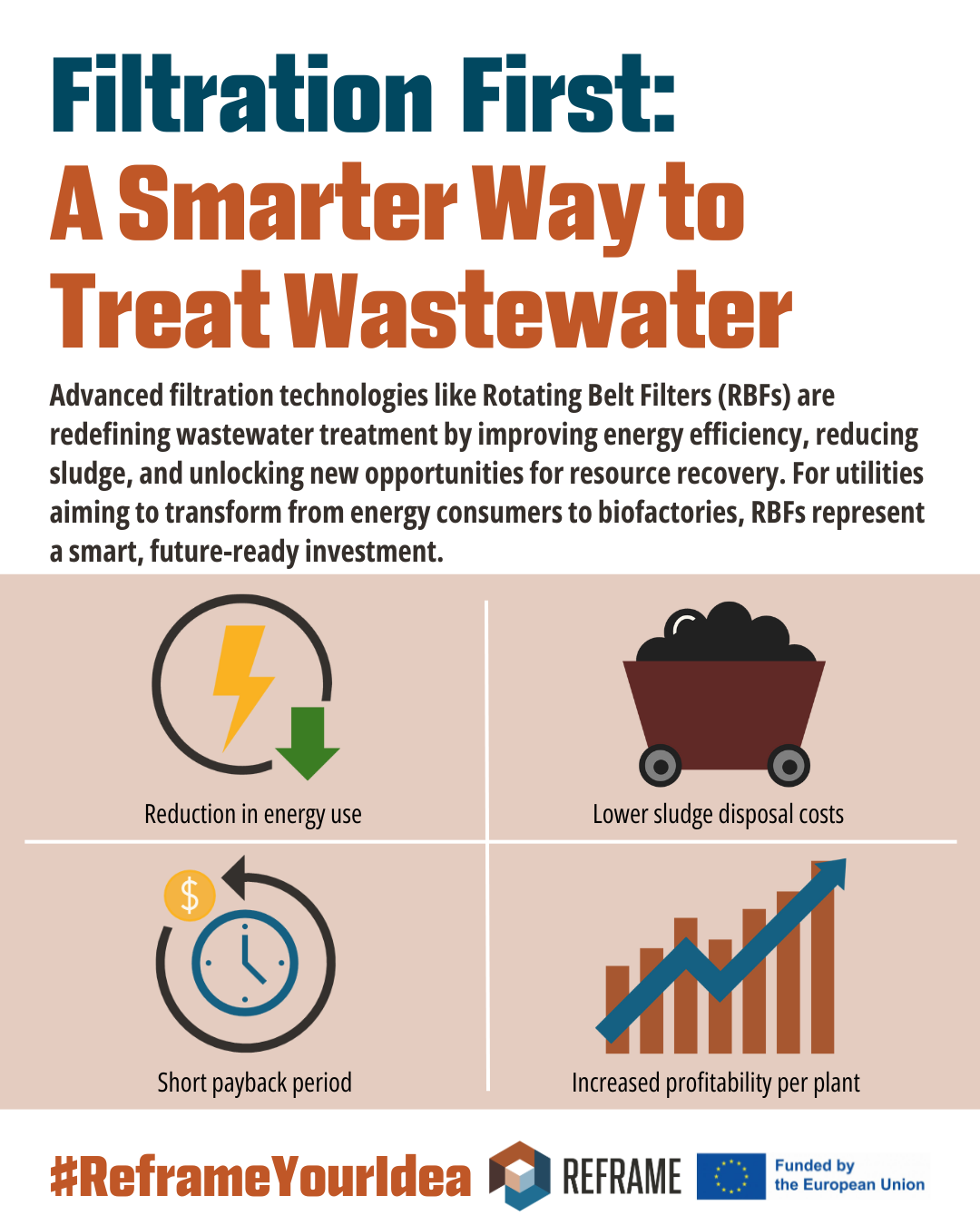
Filtration First: A Smarter Way to Treat Wastewater

Revolutionizing wastewater treatment, is it possible? Yes, step by step, with smart upgrades. One of the first impactful actions we can take is applying filtration before wastewater enters the treatment plant.  Filtration is a physical separation process that removes suspended solids by passing water through a fine mesh or porous material. Unlike traditional sedimentation, which […]

Read more

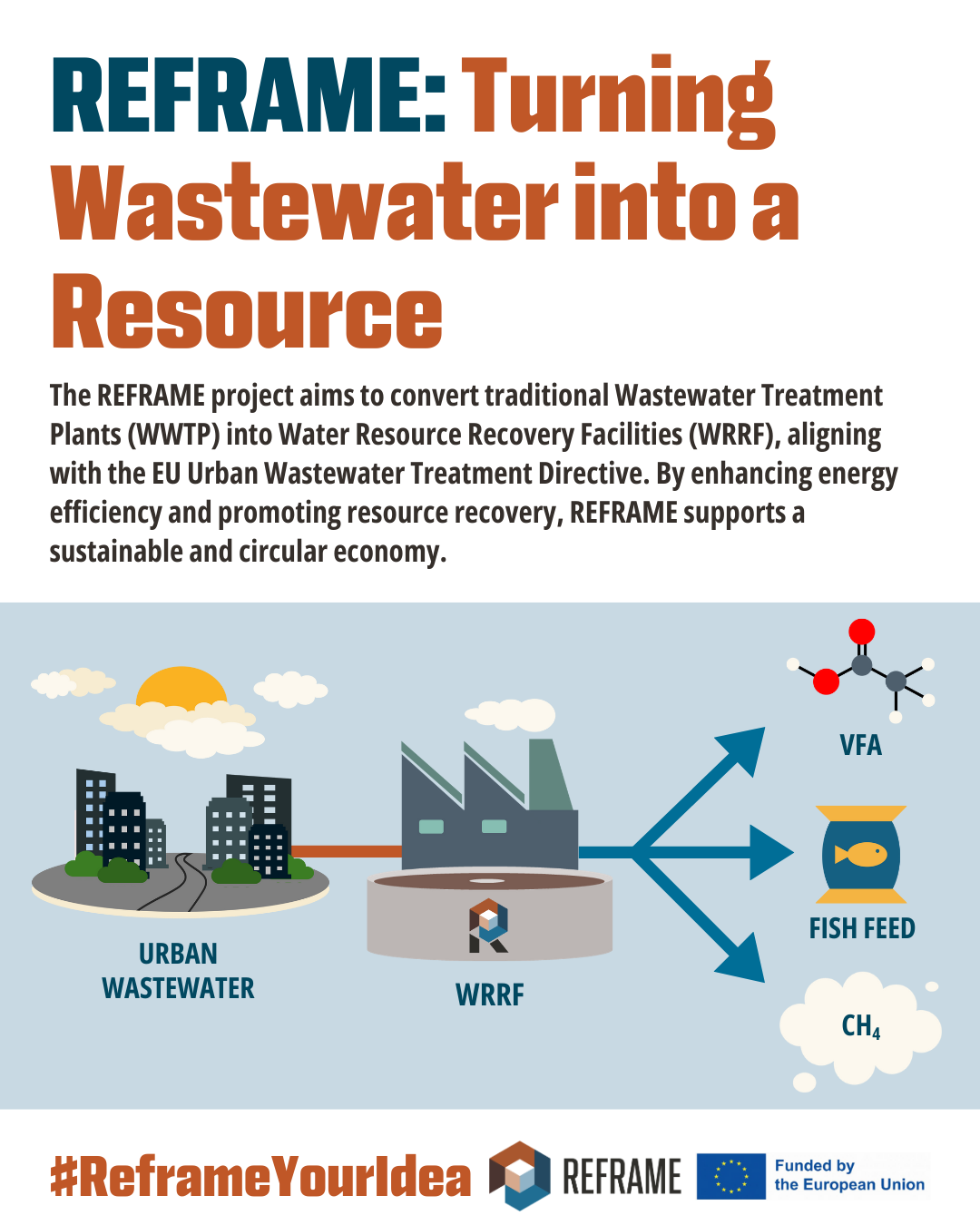
REFRAME: turning wastewater into a resource

In response to the new EU Urban Wastewater Treatment Directive, the REFRAME project is working to transform traditional Wastewater Treatment Plants (WWTPs) into Water Resource Recovery Facilities (WRRFs). Our mission aligns with several key articles of the directive, including Art. 11, and Arts. 14, 15, and 20. 🔋 1. Boosting Energy Efficiency How can REFRAME […]

Read more

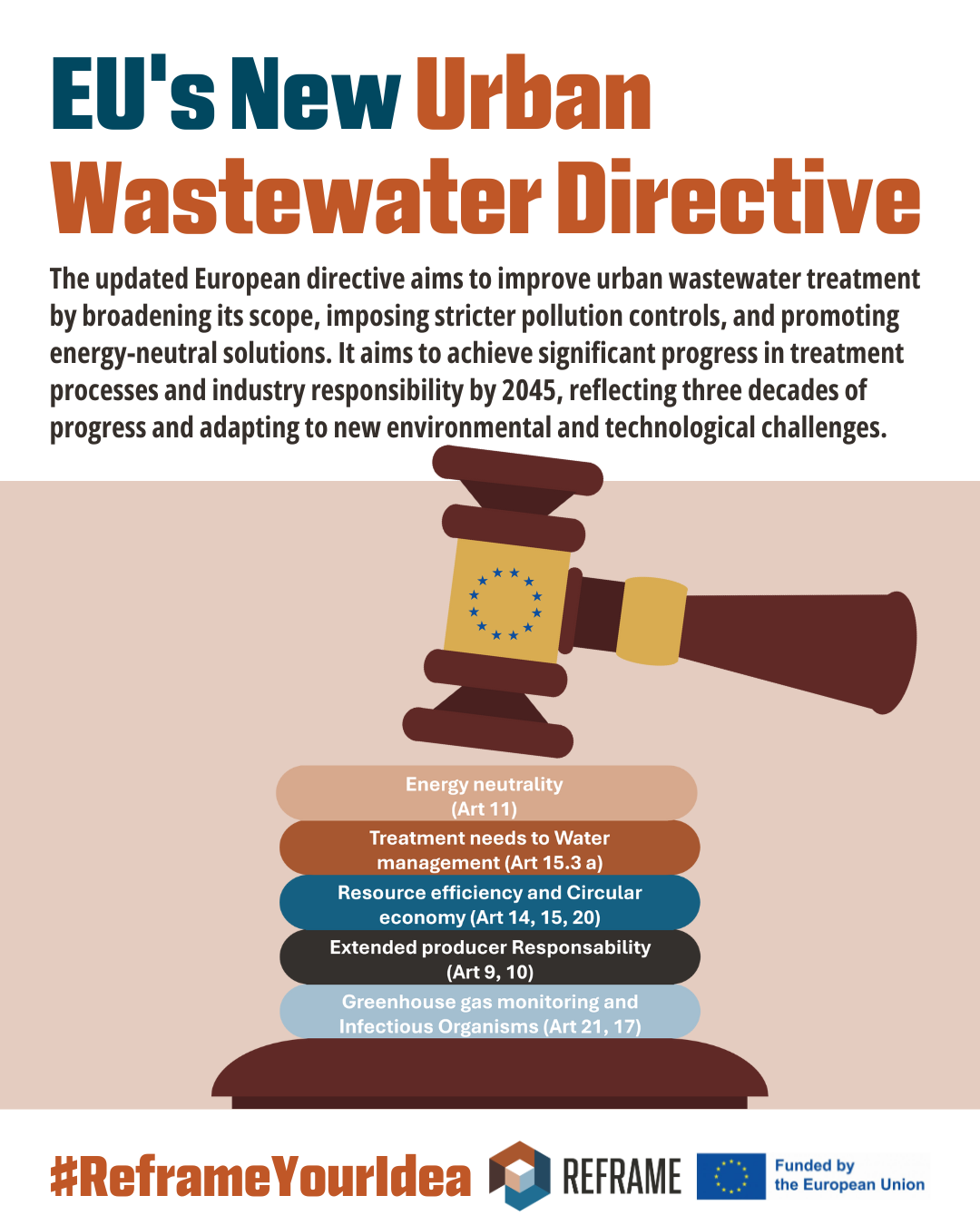
EU’s New Urban Wastewater Directive

    Urban Wastewater: The EU Gets an Upgrade Why this matters: the old rules were established back in 1991, a time when environmental concerns and technological capabilities were vastly different from today. Over the past three decades, significant advancements have been made in understanding and managing what we flush, making an update crucial. To […]

Read more

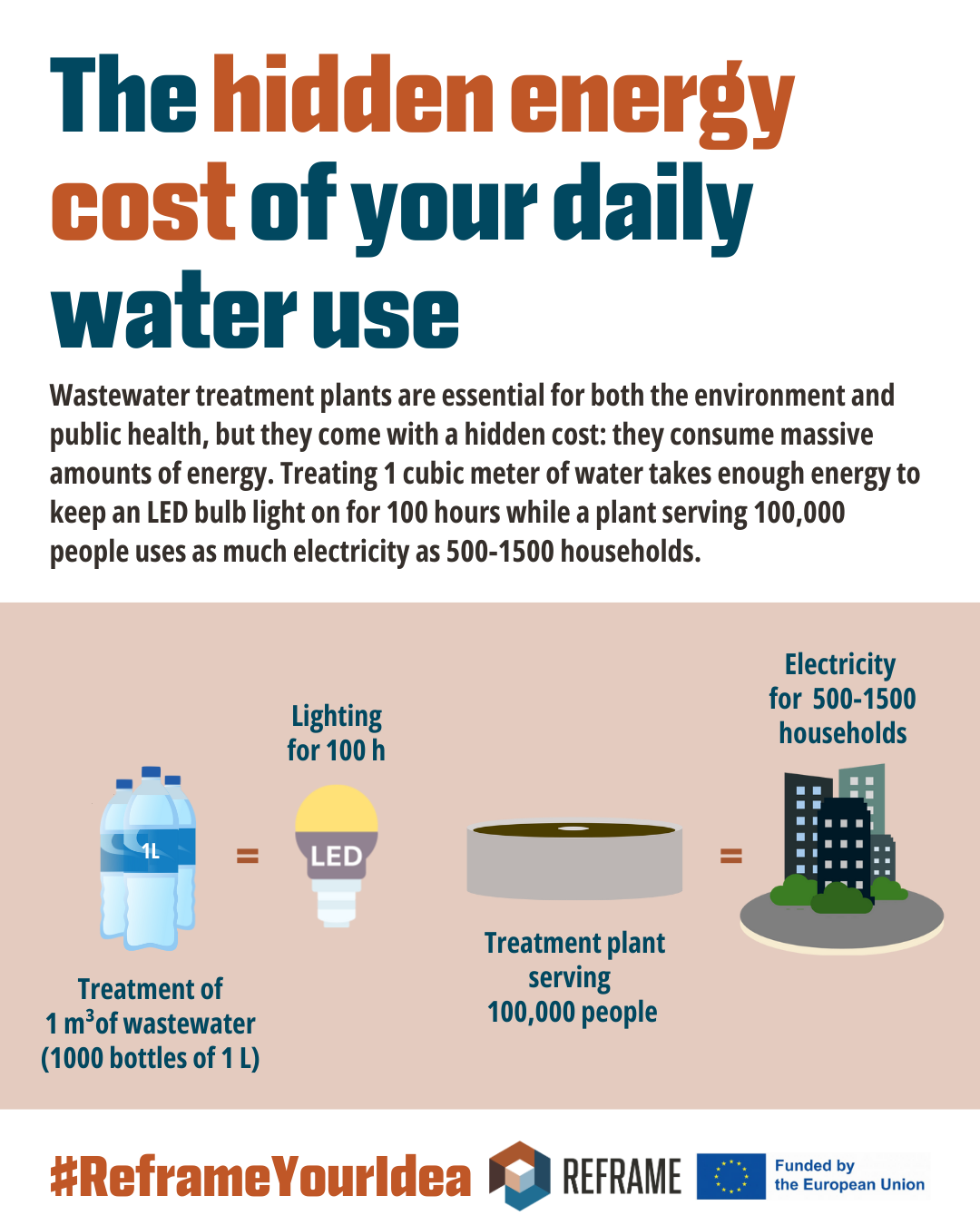
The hidden energy cost of your daily water use

Do you know how much energy it takes to treat the water you use every day? Way more than you think! As we saw in the previous article, wastewater treatment plants are essential for both the environment and public health, but they come with a hidden cost: they consume massive amounts of energy! ➡️ Treating […]

Read more

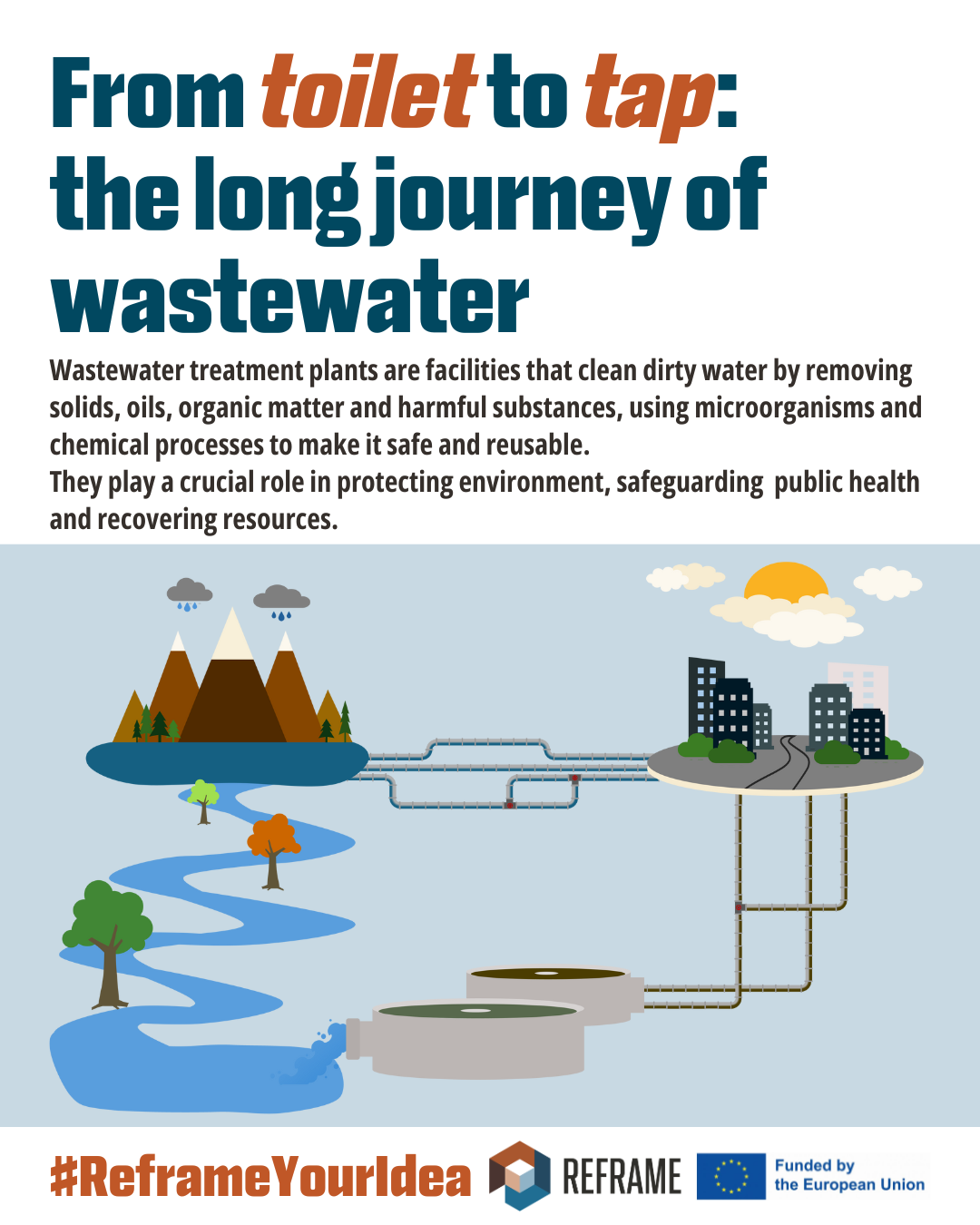
From toilet to tap: the long journey of wastewater

Ever wondered what happens to wastewater after it disappears down the drain? 🚽 Let’s explore how treatment plants transform dirty water into a safe, reusable resource for the environment! 🌊 WHAT ARE URBAN WASTEWATER TREATMENT PLANTS? Wastewater is used water that contains various substances, including human waste, food scraps, oils, soaps, and chemicals. In households, […]

Read more

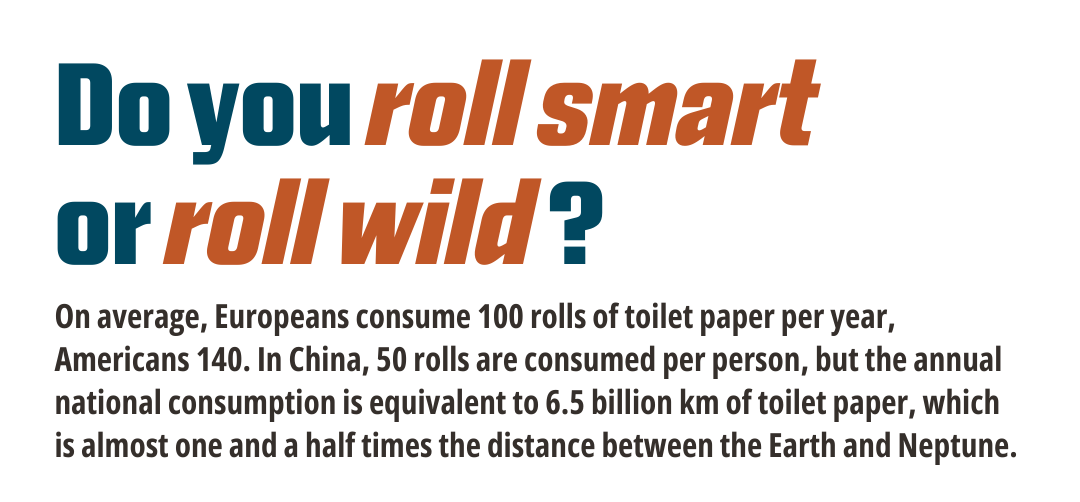
🧻 Do you roll smart or roll wild?

📉 THE PROBLEM Did you know that the average European uses about 100 toilet paper rolls annually? Americans use even more: 140 rolls per person. In China, 50 rolls are used per person, but their total consumption stretches over 6.5 billion km, which, from a NASA perspective, means that the length of this ‘unrolled toilet […]

Read more