

From sludge to sugars: the role of hydrolysis
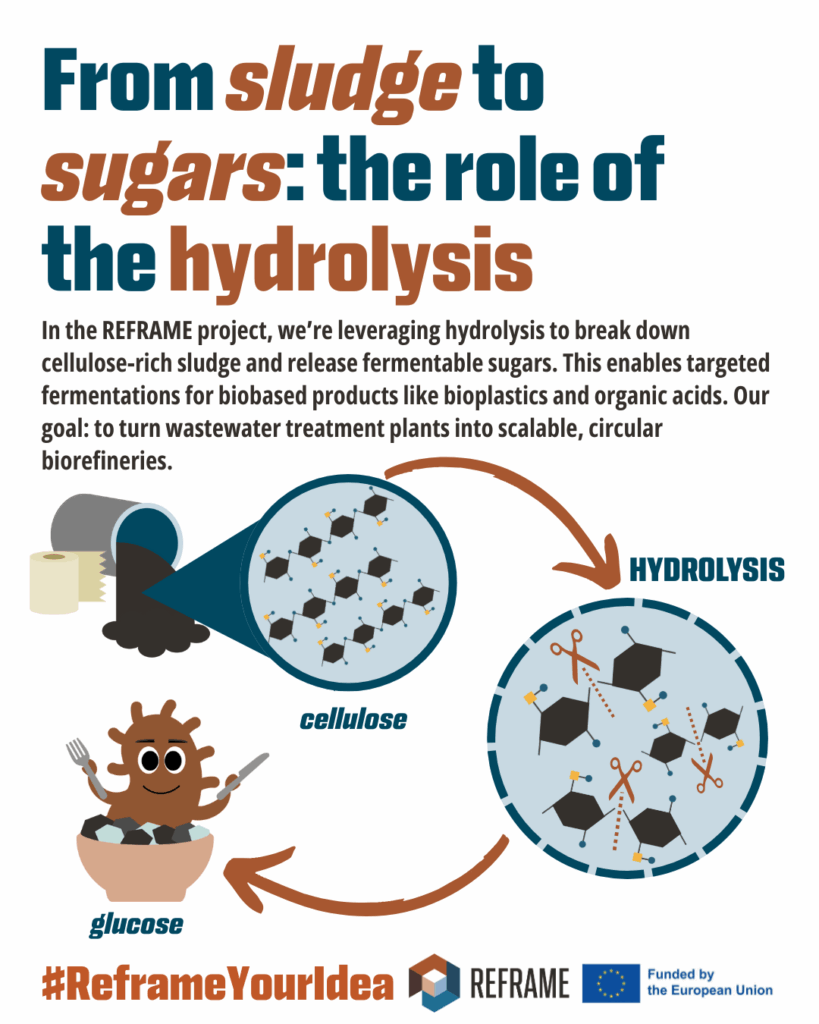
 In the EU-funded REFRAME project, we aim to convert wastewater treatment plants into circular biorefineries. A key step in this transition is recovering sugars from cellulose-rich streams, such as primary sludge, to feed targeted fermentations and produce value-added compounds.
 In the EU-funded REFRAME project, we aim to convert wastewater treatment plants into circular biorefineries. A key step in this transition is recovering sugars from cellulose-rich streams, such as primary sludge, to feed targeted fermentations and produce value-added compounds.
Cellulose is a complex molecule made up of long chains of glucose units. While biodegradable, it is also recalcitrant, meaning that without proper pretreatment, most of its potential remains locked in the sludge or requires lots of energy to be biodegraded. That’s where hydrolysis plays a central role: by breaking down these chains, it releases fermentable sugars like glucose and xylose, essential building blocks that microorganisms can readily use to grow and produce bioproducts.
In REFRAME’s trials, the hydrolysis of cellulose-rich primary sludge (CPS) was assessed under varying temperature (20°C, 38°C, 55°C), pH, and retention time conditions (24 and 48 hours). These parameters were selected to simulate realistic operating conditions in treatment plants and to evaluate their influence on:
- maximize solubilization of the cellulosic organic fraction;
- ensure process stability with scalability in mind;
- and evaluate downstream effects on fermentation performance, microbial selection, and product recovery.
The concept is simple, yet powerful: turning a residual material into a fermentable resource, paving the way for bioplastics, organic acids, and other biobased products.
🌍 In line with REFRAME’s mission, we’re working to integrate these technologies into real wastewater flows, not just under ideal lab conditions, but in a form that operators could realistically implement.
Are you also exploring sludge pretreatment or valorization technologies? REFRAME is open to knowledge exchange and potential synergies across research and operational contexts. Contacts us!
#ReframeYourIdea #WastewaterTreatment #Hydrolysis #ScienceForEveryone